
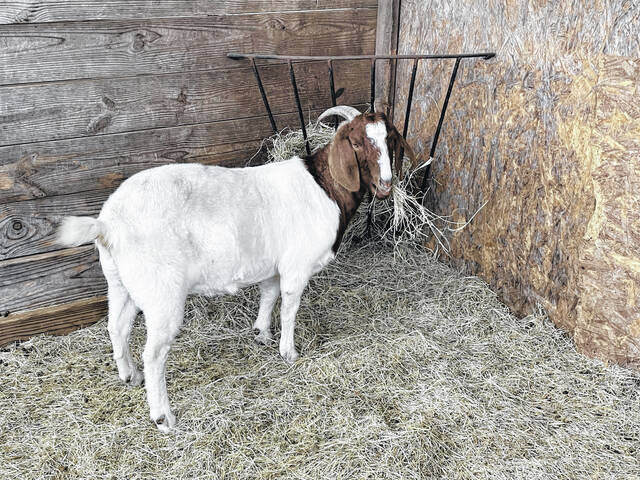
RICHMOND COUNTY — Although we are just now beginning the winter season, small ruminant owners should still be regularly checking their animals for internal parasites, especially if they have a lambing or kidding season that kicks off in early spring.
Generally speaking, stomach worm populations, such as the Barberpole worm, accumulate over the summer grazing season. This buildup creates internal parasite issues in goats and sheep especially in the late summer months, when there is adequate moisture. Most stomach worms like a warm, moist environment. Temperatures around 85 degrees Fahrenheit coupled with high humidity and moisture make an ideal environment for the eggs to hatch and develop into larvae. With that being said, winter is one of the best times of the year to make a plan and get a handle on your herd’s worm issues before the numbers are out of control in warmer weather. Since the Barberpole worm is one of the most significant internal parasites in small ruminants, this article will concentrate on managing this particular species.
Before we begin managing internal parasites, it’s important to understand their general lifecycle. In our area, mild winters are not cold enough to kill all worm larvae so stomach worms can over winter in the ground or even in the animal’s digestive system. The worms that were able to overwinter deep in the stomach of the animal are called arrested larva which lay dormant until they are triggered by a stress such as kidding or lambing. After breaking dormancy, these arrested larvae mature into stomach worms and produce eggs. These eggs are shed from the animal and deposited to the ground in their feces.
About a week or so after worm larvae hatch from their eggs in a manure pellet, they climb up 2 to 3 inches onto grass blades that goats and sheep consume. When the animal ingests the larvae, they attach and feed on the true stomach and intestine linings which can be damaged or irritated. This damage reduces the amount of nutrients that an animal can absorb during digestion. Additionally, some eggs are re-deposited back to the ground in manure, continuing the infectious cycle.
If left unchecked, stomach worms will cause weight loss, stunted growth, anemia, poor conception rates and can even cause death. To get an idea of how heavy a worm load is, periodically examine your animals. Things that usually indicate heavy worm infestations are: thin body condition, weight loss, rough hair coat, pale or white tongue and inner eyelids, and diarrhea. If you are properly feeding your animals but they exhibit these symptoms then you may need to implement some management options. Here are some tips goat and sheep owners can use to manage worm loads in their livestock:
● Provide your animals with a nutritious diet for a good immune system;
● Divide up large pastures to allow for rotational grazing; keeping animals off an area of pasture for a minimum of 21 days can help reduce parasites by cutting off the route of reinfection;
● Graze above the worms by keeping pasture grass at least 4 inches high;
● Reduce contamination by keeping feed elevated and off of the ground;
● Keeping water troughs and feed bunks clean will also reduce worm ingestion;
● Monitor parasite loads by using FAMACHA (checking paleness inner eyelids) or fecal egg counts;
● Time dewormings around kidding and lambing season;
● Refrain from using worm blocks (it’s hard to measure a single animal’s intake);
● Feeding copper boluses to goats may help reduce Barber Pole worm infestations;
● When using recommended dewormers: Rotate chemical classes and selectively treat animals to minimize resistance. Resistance occurs when the pest is routinely exposed to the same chemical over time, enabling new generations to develop which are unaffected by the treatment;
● Work with a veterinarian who is familiar with internal parasite issues in your area to provide “extra-label” dewormer recommendations.
Internal parasites are a significant issue in small ruminant management. Adopting good management practices, such as rotational grazing and good sanitation, will help reduce infective parasites in your herd or flock. It is also important that producers employ these best management practices to slow internal parasite resistance to our dewormers so that they can continue to be effective on our target parasites. If you have any questions concerning livestock management please call the Richmond County Extension office at 910-997-8255.
Leave a Reply