
ANSON COUNTY — Many parts of North Carolina have experienced extreme drought already this year. In fact, we have been experiencing dry conditions since mid-August of 2025.
With the lack of tropical storms and hurricanes this past fall, combined with a La Niña winter, precipitation deficits have increased to more than 12 inches across almost the whole state. In many areas, conditions are approaching the peak rainfall shortages seen during the historic 2007-2008 drought. One difference is that our current drought has intensified during the cooler months, when water demand and evaporation rates are low.
Successfully gardening during drought begins before dry conditions start. One of the most important decisions a gardener can make is plant selection. Choosing plants with lower water needs and embracing the principle of “right plant, right place” sets a landscape up for success. ‘Right plant, right place’ is a gardening principle where plants are chosen based on their natural ability to thrive in a specific site taking into account light levels, soil type, and moisture. Choosing site appropriate plants reduces maintenance, prevents plant failure, and promotes healthy landscapes that are better equipped to handle stress.
Sometimes difficult choices must be made when making plant selections. Some traditional garden favorites simply do not perform well in dry conditions. Gardeners may need to swap out plants that require a more water, such as astilbe, for more drought-tolerant options such as heuchera or columbine. While these decisions can be challenging, they ultimately lead to more resilient and sustainable landscapes.
Soil preparation is another critical component of a drought-tolerant garden. Incorporating organic matter such as compost in your planting beds before installation improves your soil’s ability to retain water. After your initial planting, periodically top dressing with compost can help maintain soil health over time. Mulch also plays a key role in maintaining moisture. A layer of mulch helps reduce evaporation, keeps the soil cool, and prevents weeds that compete with your desired plants for limited water. Mulch can be pine bark, pine straw, or simply autumn leaves. Pine straw, being rather open and airy, will retain less moisture than pine bark, however fine pine bark, sometimes called nursery mix or soil amendment, can actually shed water, as it has a tendency to pack down, and it can also wash away during heavy rain. Mulches and added compost both can reduce the need for supplemental irrigation during dry periods.
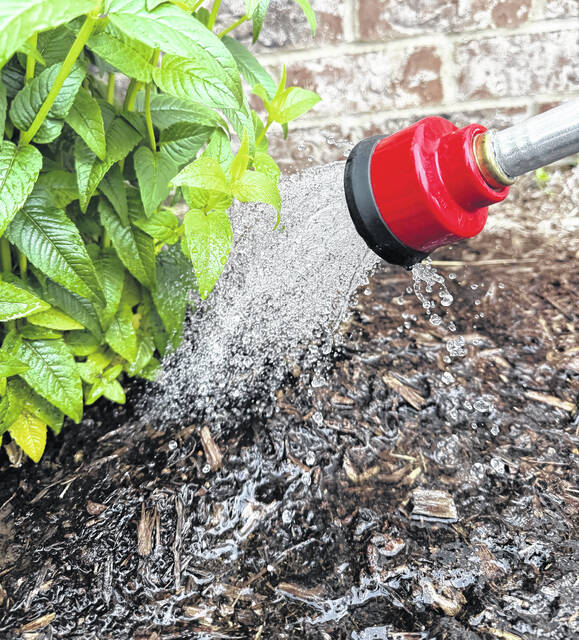
How you water is as important as how much you water. Deep, infrequent watering encourages plants to develop robust root systems that can reach deeper in the soil to access water. Frequent shallow watering leads to weak root systems that are vulnerable to drought stress. The best time to water is early in the morning when temperatures are cooler and evaporation rates are lower. Morning watering prepares your plants for the day and heat ahead and allows the leaves to dry, reducing the risk of disease. Efficient watering methods can also make a difference. Drip irrigation, soaker hoses, and targeted hand watering deliver water directly to the root zone where it is needed most. These methods minimize water loss to evaporation and runoff compared to overhead sprinklers. Keep in mind that sandy soil only holds about half the amount of water as clay soil does (about .6 – 1.5” per foot for sand), and for a shorter period of time before it drains away. Monitor your soil moisture after irrigating and over a few days’ time to get a sense of how often and how long you should water for optimal impact.
As drought conditions persist, it becomes even more important to prioritize and maintain your water strategy. Check irrigation systems regularly for leaks or inefficiencies, and ensure mulch layers are adequate to conserve moisture. Focus on watering young plants and plants with higher water needs. Established, well-adapted plants can often tolerate longer periods between watering.
Gardening during drought can be very challenging. However, by making thoughtful plant choices, improving soil health, and using water efficiently, gardeners can maintain attractive and productive landscapes even during difficult conditions. Some final examples for plants that tolerate drought conditions are Hypericum prolificum (shrubby St. John’s wort), Physocarpus opulifolius (ninebark), Rudbeckia spp. (black-eyed susan), Symphyotrichum spp. (aster), Gaillardia spp. (blanket flower), and Perovskia atriplicifolia (russian sage).
For more information about gardening during drought or if you would like assistance choosing drought resilient plants contact the Richmond County Cooperative Extension Office at (910) 997-8255 or reach out to Kinsey Watkins directly at kinsey_watkins@ncsu.edu. To learn more about workshops and education offered visit our Facebook and check out our Events page on our website.
Leave a Reply