
RALEIGH — In the American South, barbecue is less of a culinary choice and more of a state-sanctioned religion. But depending on which side of a state line you’re standing on, the “Holy Trinity” might be a slab of cow, a shredded pig, or a puddle of yellow mustard.
The “Barbecue Belt” remains a land of deep-seated grudges, where suggesting a tomato belongs in an Eastern North Carolina sauce is a socially acceptable way to get uninvited from a wedding.
The North Carolina Civil War
In North Carolina, the primary conflict isn’t between Democrats and Republicans—it’s between the East and the West. Both sides agree that the pig is the only animal worth smoking, but that is where the diplomacy ends.
To the east, pitmasters cook the “whole hog,” a nose-to-tail philosophy that results in a spiritual blend of white and dark meat. The sauce is essentially spicy vinegar water, designed to cut through the fat like a lightning bolt.
Travel west to Lexington, however, and you’ll find the “pork shoulder” purists. These rebels dare to add a spoonful of ketchup to their vinegar, creating a “dip” that is slightly red and significantly more controversial. In these parts, “barbecue” is a noun, a verb, and a reason to fight your cousin.
South Carolina’s Mustard Manifesto
South Carolina is the eccentric middle child of the BBQ family. While the rest of the South was arguing over vinegar, South Carolina’s German settlers looked at a pile of pulled pork and thought, “This needs more mustard.”
The result is “Carolina Gold,” a zesty, yellow sauce that looks like sunshine and tastes like a tangy punch to the sinuses. It is the only state that claims four different sauce “mother tongues,” but the mustard-based version remains its most famous—and most divisive—contribution to the paper plate.
The Texas Beef Empire
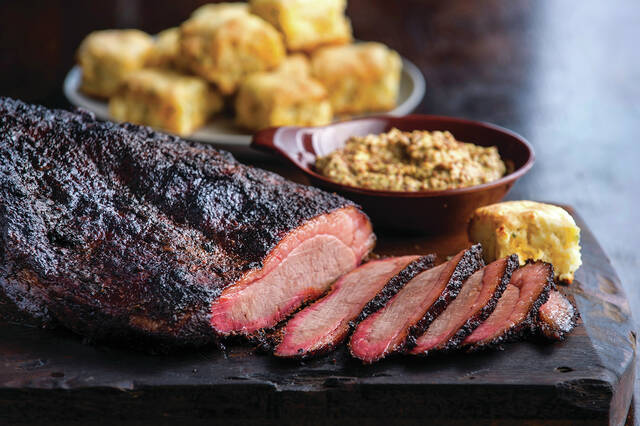
Crossing the Mississippi into Texas is like entering a different dimension where the pig is a mere side dish and the cow is a deity. In the Lone Star State, “barbecue” means beef brisket, and the seasoning is strictly “Dalmatian”—salt, black pepper, and a prayer.
Central Texas pitmasters treat sauce with the same suspicion a cat treats a vacuum cleaner. To suggest that a perfectly rendered, oak-smoked brisket needs a side of “red gravy” is considered a personal insult to the pitmaster’s lineage. Here, the meat is served by the pound on grease-stained butcher paper, usually accompanied by a slice of white bread that serves more as a napkin than a food group.
The Cheat Sheet for Avoiding a Fight
North Carolina: If it’s clear, it’s Eastern; if it’s pinkish, it’s Lexington. Just eat the hushpuppies and keep your mouth shut.
South Carolina: If it looks like honey mustard, you’re in the right place. Don’t ask for “regular” sauce unless you want a geography lesson.
Texas: It’s beef. It’s salty. Do not—under any circumstances—ask where the sauce is kept.
Leave a Reply