
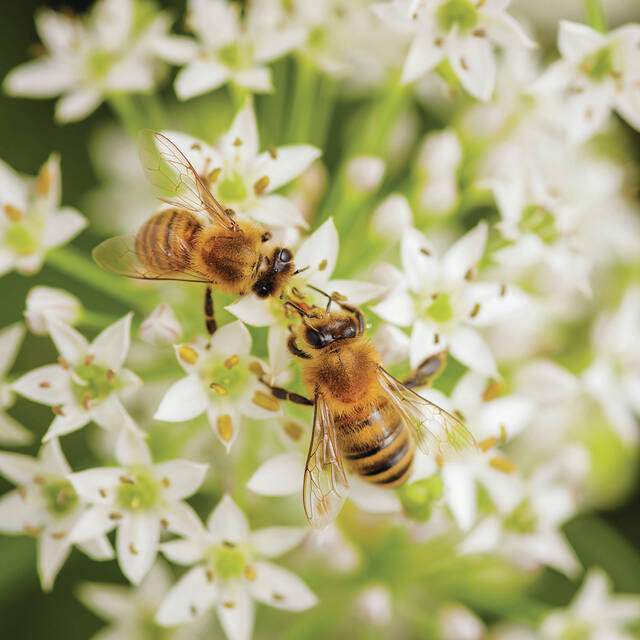
ANSON COUNTY — Now that flowers are blooming in trees and on the ground, the buzz of bees is creating a background noise every time you walk outside. There are all kinds of bees buzzing around out there: according to the NC Wildlife Federation, there are more than 500 species of bees native to North Carolina. There is one bee you’ll often see moving from flower to flower, which is not native: the honey bee. However, honey bees have made themselves home in North America, having been brought to this country by European settlers in the 1600s.
Honey bees are important for crop pollination, as they can be easily transported in their hives from crop to crop when the exact timing for pollination services is required. For example, California, which supplies about 80% of the world’s almonds, is one of the first crops to use honey bees pollination services, in February. From there, hives are moved to other crops such as berries, citrus, watermelons, and more. Each hive can hold up to 80,000 honey bees, and approximately two hives per acre is needed to pollinate the almost 1 million acres of almond orchards in California. That’s a lot of beehives! Pollination services are provided by commercial beekeepers, who have the ability to load and move thousands of hives all across the country. Most beekeepers operate on a smaller scale, and are considered “hobby beekeepers.”
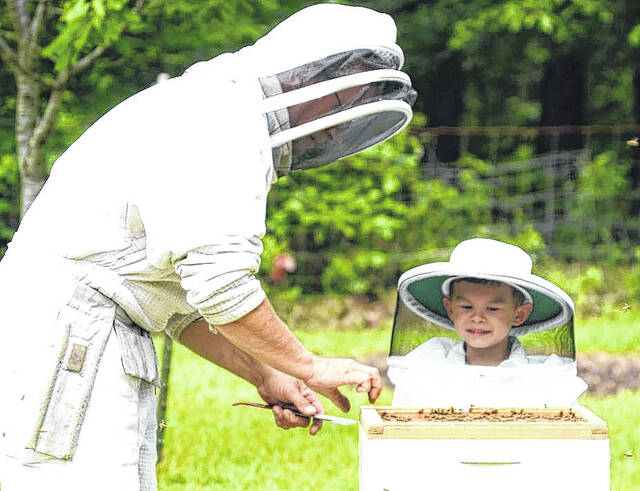
North Carolina has about 15,000 beekeepers, the most beekeepers per capita of any state! There’s an old saying about beekeepers: ask 10 beekeepers a question about honey bees, and you’ll get 11 different answers. One thing they can all agree on: having the responsibility of caring for honey bees, watching their fascinating life cycle, collecting honey, and sharing the products of honey bees with others, is a passion that makes all the work worthwhile.
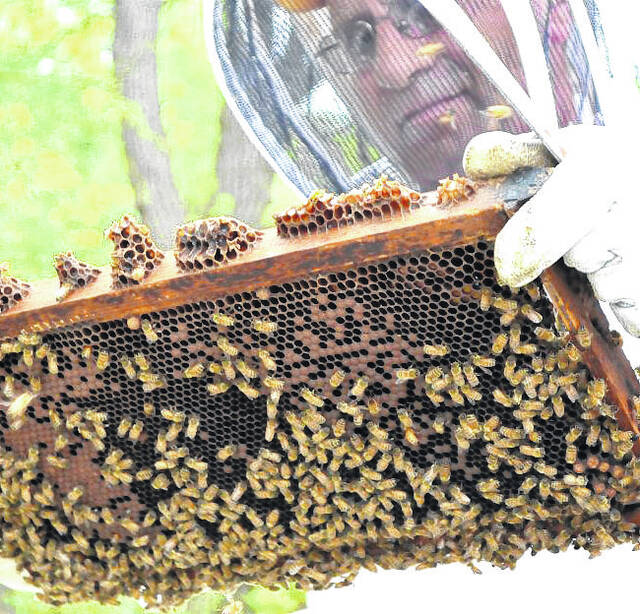
This time of year is “go time” for beekeepers. Having just come through winter, the queen is now laying eggs at a rapid pace, to replace worker bees (which are all female) which died off during the winter, and create drones, which are all male, and needed to fertilize new queens created this time of year. Beekeepers need to check hives, make sure each queen is in good shape and laying. If it’s a strong hive, they will need to “split” it, which involves making two hives out of one. This is done to try to avert “swarming” – when a hive gets too full of bees, the queen has no more room, and the worker bees raise a new queen. When the new queen emerges, half of the bees leave the hive with a queen to look for a new home – taking half of their honey with them. Often beekeepers can catch swarms – it’s a great way to gain new hives – and sometimes hives will swarm even after splitting.
This is “swarm season!” A honey bee swarm is an amazing thing to see: thousands of bees swirling in the air, then flying off in unison to find a new home. During a swarm, honey bees are typically non-aggressive: they’re full of honey and focused on finding a new home. It’s not uncommon to see a swarm resting – hanging from a branch, on the eve of a house, or even, as occurred recently at the Charlotte airport, a honey bee swarm in the engine of a plane (which was safely removed before takeoff). If you should see a swarm, don’t “bee” afraid! Find a beekeeper to come and get them – they will thank you for the opportunity. If you don’t know a beekeeper, call the Cooperative Extension office (910-997-8255): We’ll help connect you to a county beekeeper who can help.
Honey bees are critical to pollinate so many foods we love to eat, and our local beekeepers work hard to keep their bees healthy. Support your local beekeepers by purchasing their honey! Local honey is pure honey, made by local bees from local flower sources. National brand honey in grocery stores is often adulterated with corn syrup, heated (which destroys all the health benefits of honey), and comes from other countries such as China and India. Local honey is sold at the Rockingham Farmers’ Market (opening day, May 9), and local businesses such as Vuncannons in Ellerbe.
A local beekeeping club, the nearby Richmond County Beekeeping Association, meets on the 4th Tuesday of the month at the Ag Services Center, 123 Caroline Street, Rockingham, at 7 pm. The club sponsors monthly educational programs, field days, and public service events throughout the year. Anyone interested in honey bees are welcome to attend any of the programs. For more information, visit the Richmond County Cooperative Extension website, richmond.ces.ncsu.edu, Events, for details on monthly programs. Sign up for the Extension monthly e-newsletter, to get details in your inbox.
Spring is here: Don’t worry, “bee” happy!
Leave a Reply